

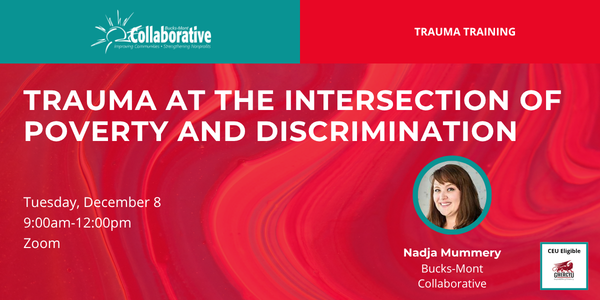
Trauma at the Intersection of Poverty and Discrimination
This training will use the concept of intersectionality to explore how poverty and discrimination contribute to trauma impact. Attendees will identify the unique challenges faced by people who experience multiple forms of oppression and develop strategies for working with people who have experienced poverty, trauma, and discrimination in a trauma-informed and culturally competent way.
Tuesday, December 8
9:00am-12:00pm
Zoom

Who Is This For?
- Emerging Nonprofit Professionals
- Executive Directors, CEOs, and Senior Leadership
- Program Staff
- Development & Fundraising Professionals
- Human Resources Professionals
- Board Members
- Volunteers
- Consultants/Capacity Builders
 What You’ll Take Away
- Compounded systemic barriers: Overlapping marginalized identities (race, gender, disability, class) multiply discrimination, deepening trauma and poverty.
- Brain impact of scarcity and bias: Scarcity drains mental bandwidth, while trauma and implicit biases push the brain from logical problem-solving into survival-mode reactivity.
- Tools for personal and systemic change: Tackling these issues requires individual action using trauma-informed tools (like LATE and PALS frameworks) alongside macro-level policy advocacy.
- Free CEU credits through Gwynedd Mercy University.
Meet the Trainer
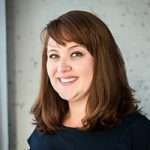 Nadja Mummery
Training Institute Coordinator, Bucks-Mont Collaborative
Founder, Learn to Heal Consulting
Nadja Mummery is a seasoned community educator with over a decade of experience promoting positive change in the Greater Philadelphia and North Penn regions. Nadja has been instrumental in developing trauma-informed and racial equity programs focused on poverty, trauma, and discrimination.
Beyond her direct program work, Nadja has also provided training to organizations and individuals, equipping them with tools to navigate these complex issues through Learn to Heal Consulting.
As the Training Institute Coordinator with the Bucks-Mont Collaborative, Nadja is excited to continue her dedication to community support and training. Her work centers on building knowledge and promoting equitable, trauma-informed practices within the community.